Lake Erie Bug Hatches and How They Affect Walleye Fishing

If you spend enough time on Lake Erie in the summer and early fall, you’re going to experience it:
Clouds of bugs. Covering the boat. Sticking to everything. Making the deck slick.
Welcome to Lake Erie bug hatch season.
Two primary hatches impact anglers:
Midges (early summer and early fall)
Mayflies (typically late June into July)
They don’t bite — but they can absolutely impact your fishing and your experience on the water.
First — The Good News About Lake Erie Bug Hatches
Let’s get this out of the way:
👉 These bugs do NOT bite.
But…
👉 They get everywhere.
On your clothes
In your hair
On your rods and reels
Covering electronics
Stuck to the deck
And when they pile up, they can:
Create a messy, slippery deck
Distract anglers
Make things uncomfortable if you’re not prepared
Midge Hatches — The Early and Late Season Nuisance
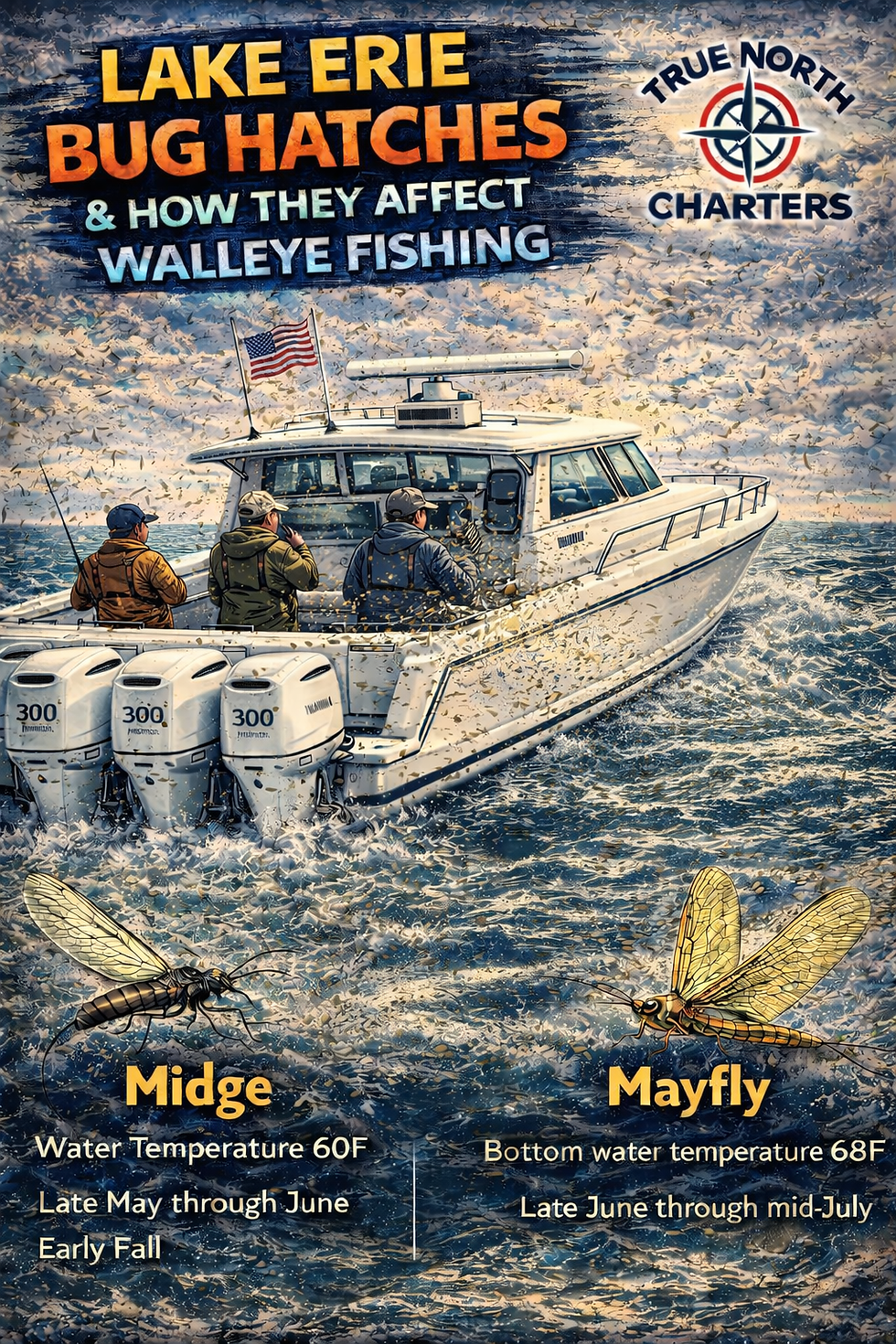
Midges are small, mosquito-shaped insects that hatch in large numbers what water temperatures reach around 60 degree Fahrenheit, especially:
Late May through June
Again in early fall as water temperatures fall back into the low 60s F
They tend to swarm around and on the boat, especially on calm days with no wind.
How Midges Affect Walleye Fishing
Midges are usually more of a nuisance than a major fishing disruptor, but they can still influence fish behavior:
Fish may key in on small insect activity near the surface
Feeding patterns can change temporarily
Walleye may become slightly less aggressive toward larger presentations

Midges covering the deck making a slippery surface.
Mayfly Hatch — The Big One
The Lake Erie mayfly hatch is one of the largest aquatic insect events in North America.
It typically occurs when the water temperature at the bottom reaches 68F. This typically occurs:
Late June through mid-July
Can last a week or more
These insects emerge from the lake bottom in massive numbers, molt, and eventually fall back to the surface. They are most prevalent in the western basin of Lake Erie around the islands.
Why It Matters for Walleye
This is where things get interesting.
During a mayfly hatch:
Walleye often feed heavily on emerging insects
Fish can become full and less aggressive
Traditional baits may be ignored
Bite windows can become shorter and more specific
In extreme hatches, fishing can temporarily slow — not because fish aren’t there, but because:
👉 They are already feeding nonstop on an easy food source.
How to Adjust Your Fishing During a Midge or Mayfly Hatch
While hatches can make fishing more challenging, they don’t make it impossible. You just need to adjust.
1. Downsize Your Presentation
When fish are feeding on small insects:
Smaller profiles can be more effective (ex: Michigan Scorpion Spoons)
Subtle presentations often outperform aggressive ones
2. Slow Down Your Approach
Fish that are already feeding heavily may not chase fast-moving baits.
Reduce trolling speed
Focus on controlled, natural presentations
Stay in productive zones longer - if you catch a fish turn around quickly to troll back over that area
3. Fish Deeper or Away From the Hatch
Not all fish are feeding on insects equally.
Target fish slightly deeper in the water column
Use electronics to locate suspended fish and target that depth
4. Trigger Reaction Strikes
Even when fish are full, you can still get bites by forcing a reaction.
Use crankbaits with erratic action
Change speeds frequently
Use a zig-zag pattern when trolling
5. Stay Mobile
Hatches are not always uniform across the lake.
Move to different areas
Look for zones with less bug concentration
Adjust based on where fish are actively feeding
The Physical Reality — Be Prepared
What Helps
Wear long sleeves and lightweight pants
Bring a hat and sunglasses
Have a towel handy
Unfortunately, bug sprays such as Off and Cutter do not help
Accept that it’s part of the Lake Erie experience
The Hidden Positive
While hatches can be frustrating, they are actually a sign of a healthy, thriving ecosystem.
And despite the temporary challenges:
Fish are still there
Limits are still possible
Great days still happen
Experienced captains adjust — and continue to produce.
Final Thoughts
Lake Erie bug hatches are something every angler will experience at some point.
They can:
Make a mess
Change fish behavior
Require adjustments
But they don’t have to ruin your trip.
With the right expectations and the right approach, you can still have a very successful day on the water.
At True North Charters, we adapt to conditions — whether that means changing locations, adjusting presentations, or working through hatch-driven patterns.
One Trip. Full Focus.
Book your Lake Erie experience today:👉 www.fishontruenorth.com